Welcome!
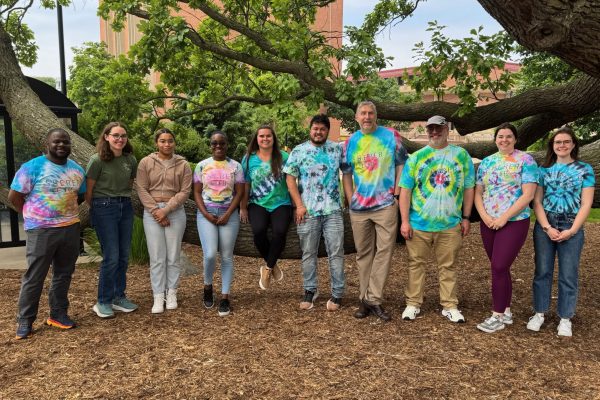
Click the links above to learn about our ongoing research projects, our fantastic lab members, and other exciting lab news!
Retroviruses cause a variety of cancers and immunodeficiencies throughout the animal kingdom. Our group is interested in the cell biology underlying the assembly and spread of the human immunodeficiency virus type 1 (HIV-1) that causes the acquired immunodeficiency syndrome (AIDS), as well as oncoretroviruses and other cancer viruses. All viruses have evolved to hijack specific features of their cellular hosts in ways that favor efficient viral replication. Understanding virus-host interactions can inform the development of novel antiviral strategies, and, in general, viruses provide great tools for probing questions of cellular function and immunity.
Advances in live cell imaging allow us to monitor specific stages of viral life cycles in striking detail. Our lab combines time-lapse fluorescence microscopy with genetic and biochemical approaches to study how HIV-1 and other viruses express genes, assemble virus particles, and transmit infection from cell to cell.
Our lab is housed in Robert M. Bock Laboratories and is part of UW-Madison’s Institute for Molecular Virology. The lab is also affiliated with the McArdle Laboratory for Cancer Research (Department of Oncology) in the School of Medicine and Public Health, and the UW-Madison Carbone Cancer Center. We train undergraduates, graduate students, and postdoctoral researchers in molecular virology, and recruit PhD students from the following graduate training programs: Cancer Biology, Molecular and Cellular Pharmacology (MCP), Microbiology (MDTP), Cell and Molecular Biology (CMB), and Biophysics.
Special thanks to Sydney Lesko for launching this web site.